|
20-20 mars 2026 PARIS (France)
|
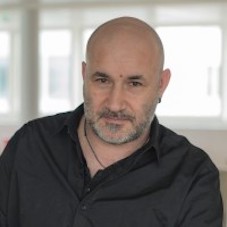
Président(e) de SessionHugues Berry, Head of INSERM's Office for AI & Digital Sciences
Since March 2025, Hugues Berry has been heading the newly-created Inserm's office of digital sciences for health research. A computational cell biologist, his research focuses on mathematical and computer models of the spatiotemporal dynamics of biochemical reactions involved in cell signaling, in particular in brain cells. His publication track comprises more than 70 articles, mostly in journals for experimental and computational biology but also in computer science and applied mathematics. Enrique Bernal-Delgado, EOSC-A Director, Senior Scientist, Aragonese Institute of Health Sciences (IACS)
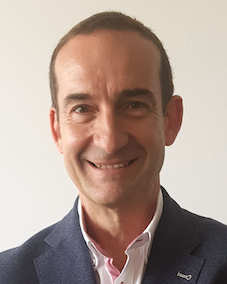
Enrique Bernal-Delgado is a Senior Scientist in Health Services and Policy Research at the Aragonese Institute of Health Sciences (IACS), with over 25 years of experience in data science for health services. His work focuses on the design and implementation of multi-site and multi-country data-driven health services, as well as the creation of health data spaces and infrastructures. He leads the Data Science for Health Services and Policy Research group at IACS, where he drives innovation in multimodal health data infrastructures, including the regional health data space BIGAN. Enrique has hands-on experience across national and European initiatives, from AtlasVPM to ECHO, implementing rapid-cycle data ingestion and full life-cycle management of sensitive health data. He contributes to the design and development of HealthData@EU, the European Health Data Space infrastructure for secondary use, and is actively involved in EOSC United, where his team works to establish effective linkages between the EOSC EU Node and the HealthData@EU secure process environments. Isabelle Perseil, Lab' Innov, IT Department, INSERM
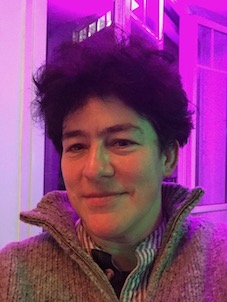
Isabelle Perseil (both Engineer and Doctor in computer science) spent part of her career in the private sector working for consultancy firms across a wide range of sectors, developing specialist expertise in the architecture of high-throughput transactional systems and very large database management systems, particularly those supplied by IBM. Having worked at INSERM for 25 years, Isabelle has developed the latest IT strategy, centred on a significant contribution to scientific computing. In particular, it established an IT coordination structure, enabling it to roll out a computing plan across all regions where Inserm research units are based, providing them with access to shared resources for high-performance computing (meso-computing centres and accredited data centres) and offering training in the use of supercomputers. Internationally, Isabelle Perseil is best known for her significant contribution to the Research Data Alliance (16,000 members), where she was elected for two consecutive terms as co-chair of the Technical Advisory Board, the first time in partnership with Australia and the second time in partnership with the USA. Part of the role involved coordinating the (116) working groups, advising them and evaluating their work. Another part of the role involved contributing to two strategic plans, helping to shape a European vision for them. Isabelle also contributed to the EOSC “Semantic Interoperability” Task Force and co-led WP6 (FAIRification and Provenance services) of the European EOSC-Life project, life sciences cluster. David Salgado, Head of Bioinformatics for Health initiatives, IFB (ELIXIR-FR), INSERM US21
David Salgado is a prominent bioinformatician based in Marseille, France, currently serving as Head of Bioinformatics for Health Initiatives at the Institut Français de Bioinformatique (IFB) - ELIXIR-France - INSERM US21 since March 2025. He holds a PhD in Bioinformatics from Aix-Marseille University (2006-2009) and a DESS in Bioinformatics for Genomics (2003-2004). His expertise includes bioinformatics, NGS, genomics, health data management, project management, and research innovation, with strong ties to Marseille's research ecosystem like INSERM and AMU. David oversees bioinformatics platforms and tools for genomic and health data processing, building on his prior IFB project management, manages teams and collaborations with Marseille hubs like TAGC (Aix-Marseille Univ.) and INSERM U1251 for NGS, variant annotation, and rare disease genomics and drives innovation in research data management, including AI/ML integration for health projects, drawing from his CAD data manager experience. David leads health-focused training programs and workshops on reproducible bioinformatics pipelines, contributes to ELIXIR-France nodes for interoperable data services, emphasizing French biomedical research ecosystems and publishes and presents on scalable NGS analysis and genomic databases, often tied to Marseille's medical genetics community. |